“Base Case”: Financial Expression of the Day


Beware the Financial Soothsayer...

Beware the Financial Soothsayer…

...they can't even match P. Phil

…he can’t even match P. Phil’s record


Base Casenoun phrase, the most likely or expected scenario when forecasting corporate financial performance.

Usage Note: Financial desk jockeys from buy-siders to investment bankers to corporate CFO’s use this term as part of their regular business of prognostication.  It’s especially relevant during the grind show where the bankers and companies shamelessly stump for money to run their business (or rather, to waste on pet projects, diversifying acquisitions with “synergies”, or to pay a dividend to their Private Equity owners).

In the realms of High Finance, the business of forecasting is part and parcel of the job.  Either you’re a CEO trying to convince investors your company will never see a downturn and can only grow year after year; or a banker trying to bamboozle the syndicate of “accounts” into thinking it’s normal that the company you’re hawking has an EBITDA forecast that looks like a “Hockey Stick”; or you’re a money manager trying to convince clients you can read the tea leaves and spot the canaries dying in the coal mine to ensure you make the best picks at the best times. Continue reading

“Face Time”: Financial Expression of the Day

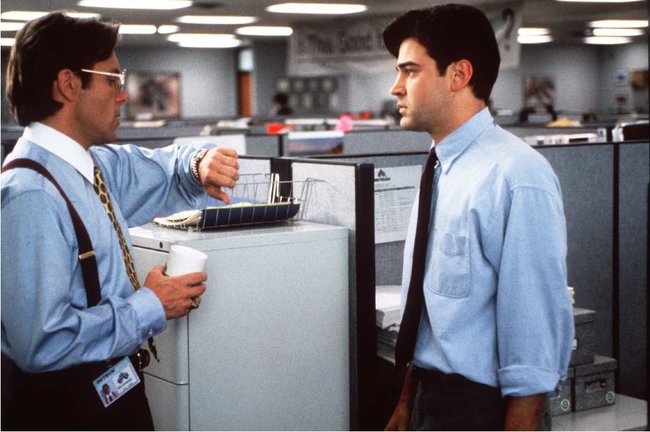
When the MD hits the road, Face Time begins

When the MD hits the road, Face Time begins

Face Time, noun phrase, in investment banking, the act of putting in more hours at the office than necessary to accomplish a given day’s worth of work; typically manifested as arriving to work earlier than co-workers and superiors, and leaving work after all colleagues have undocked for the day.

Usage Note: Germane primarily to the analyst and associate, Face Time is an affectation for the purpose of leading superiors (and competing colleagues) to believe one is uber dedicated to maniacal levels of hard work and is possessed of an unquenchable lust for the honors and riches of a tenured investment banker. One of the most mysterious puzzles inside the royal domain of investment banking, Face Time has persisted as a practice among young bankers probably since the 1980’s.

It’s an oddity that defies reasonable explanation and the practice is all the more strange considering two things in particular: 1) Why would people of otherwise high levels of intelligence do this? Why would someone want to hang around the office until 10 or 11pm on one of the few evenings when they actually don’t have something work-related to do- a ridiculous assignment hasn’t been given, or one is not engulfed in the misery of managing the latest iterative change to “the document”? 2) Knowing that in most cases, the junior banker’s superiors (Vice Presidents, Directors, or Managing Directors) have come up the ranks acting out the same mindless show makes it all the more of a charade, and unlikely to convince anyone of your i-banking bona-fides. It’s an open secret and although manifestly asinine, no one can muster the courage to break the vicious cycle because if someone higher up had to do it, then “by God, the youngsters are going to pay their dues just like I did!” Like some form of Stockholm Syndrome, the young bankers strangely feel proud to be victimized office captives (at least in the early days) as a stripe that must be earned on their way to being masters of the universe. Continue reading

Pusillanimous Harvard Prof. Picks Fight with Immigrant Mom and Pop Business

Edelman: Professor of the Internet batting down pop-ups

Edelman: Professor of the Internet batting down pop-ups between tirades on Small Biz

Yesterday, Boston.com broke an important story in the ongoing saga of American class warfare, found here.  In a disheartening show of douche -baggery, Harvard Professor Ben “I’m a Twit” Edelman decided he should use all his “high learning” to deliver a course in “Ben-Ed”; that is, teach a simple bar manager, Ran Duan (whose immigrant parents founded Sichuan Garden Chinese Restaurant in Boston) a big lesson in false advertising.

The short story is this:  Edelman ordered what he thought was about 53 bucks of food but to his utter shock, found he paid something like $57 upon examining the receipt.  The culprit: out-of-date menu prices on the website.  The pedantic and punctilious Edelman (some kind of Professor of the Internet, according to his bio) then engaged in a testy back and forth via e-mail with Messr. Duan wherein he demanded 3x damages ($12) for the inconvenience. Continue reading

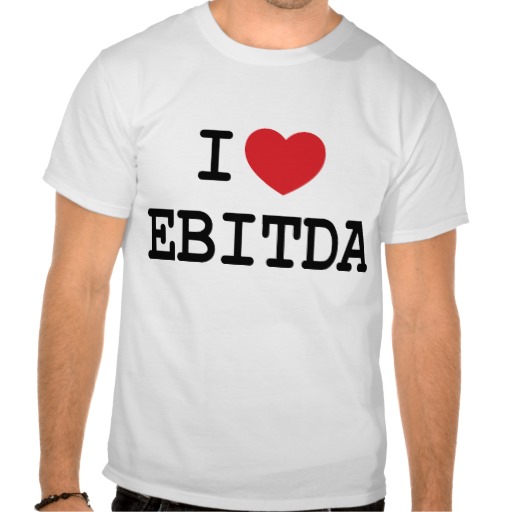
“EBITDA”: Financial Expression of the Day

i_heart_love_ebitda

EBITDA: Acronym, Earnings Before Interest, Taxes, Depreciation, and Amortization.

Pronunciation Guide: The first rule in using this financial shibboleth is knowing how to say it correctly; it is pronounced strictly as two words with three syllables: /ē-bit dah/.  Pronouncing as one word followed by two letters is also acceptable: /ē-bit D-A/. It is not advisable to pronounce the term in any other way.  Some southerners, and some corporate CFO’s who came up the ranks with an accounting background (rather than the more astute Wall Street pedigree) have been heard to say /ēbiduh/ or /ehbiduh/. This betrays an amateurish knowledge of high finance and will engender snickers and silent chuckles from the white shoe financier. For example, George “Dubya” Bush might say to Dick Cheney: “Boy Dicky, I misunderestimated how much ēbiduh Haliburton would produce with all yer kickbacks!” Continue reading

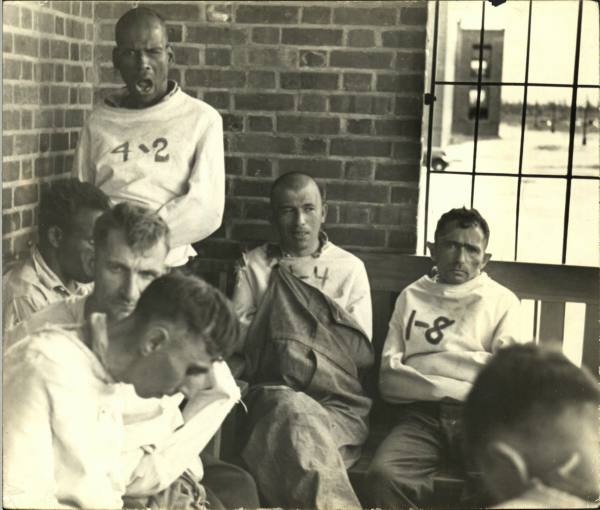
From the Loony bin…

Lock these people up.

Lock these people up.

Bud’s Round-up of Daily Drivel:

CalPERS pulls out of Hedge Funds: Paul Singer Whines “We Just Don’t Understand!”

What do Hedge Funds and Toddlers have in common?

What do Hedge Funds and Toddlers have in common?

Back in September, CalPERS (California Public Employees’ Retirement System) the country’s largest public pension fund decided to pull out of all hedge fund investments.  The reason: fees are too high to justify the returns generated.  The decision has some hedge fund managers worried, and others crying.  Although CalPERS had only allocated about $4 billion to direct hedge fund investments, the fund is considered a bellwether for other public pension funds and endowments.  At about $300 billion of total assets under management, when CalPERS talks, people listen.

One of the people listening was Paul Singer, head of hedge fund Elliot Management.  In a recent letter to investors, Paul threw a bit of a tantrum about CalPERS decision and sounded like a cry-baby toddler when his friend takes the toys and goes home.  Singer called the CalPERS decision “off base” and betrayed his lack of understanding of fiduciary duty for public funds saying  “We… never understood the discussions framed around full transparency.  While nobody wants to invest in a black box, Elliott (and other funds) trade positions that could be harmed by public knowledge of their size, short-term direction or even their identity.”  Continue reading

From the Loony Bin…


Lock these people up.

Lock these people up.


Bud’s Round-Up of Daily Drivel:

“Bankster”: Financial Expression of the Day

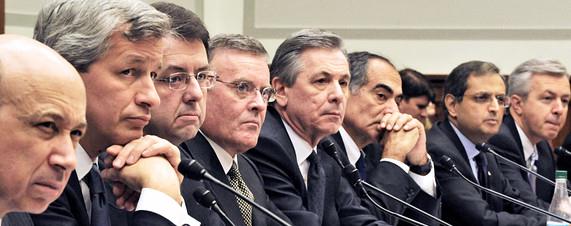
The Banksters Banquet

The Banksters Banquet

Bankster,” noun portmanteau of banker and gangster, pronounced /`bangk-stah/ if the user is striving for ‘street cred’ (i.e. street credibility for wannabe gangsters).  A profiteering, predatory or dishonest financier.

Usage note: This term is used primarily as a pejorative. Occupy Wall Street-type dingleberries over-apply the word to describe all those that actually occupy Wall Street jobs. Of course, in many instances the term is rightfully applied to the Fat Cats of Finance (as opposed to the armies of drones working in the industry), who are regularly fleecing the rest of society in the name of helping people save, manage and raise money. Continue reading

“Take a Hit”: Financial Expression of the Day

Ouch, that was my bonus.

Ouch, that was my bonus.

“Take a Hit”, verb phrase: In business and finance, to suffer an adverse result or outcome. In this context, it is something to be avoided. In cannabis culture, to inhale (i.e. to take a drag, puff, or toke) of a marijuana cigarette (a.k.a. joint, spliff, blunt, or roach). In this context, it is something sought after. The dual meaning and diametric connotation can potentially confuse and ensnare the neophyte junior analyst at a hedge fund or investment bank, if he is not used to keeping his personal and professional lives separate.

Usage Note: Finance and business types use this phrase usually when money is lost in one way or another, often with an element of surprise. For example, a CEO (such as Ron Johnson of recent JC Penney fame) trying to explain a 20% decline in sales year-over-year might say, “We underestimated the number of customers we would lose by changing our pricing strategy from discount to premium luxury over a single weekend. Our revenues took a hit as a result.” Continue reading