“Delta”: Financial Expression of the Day

John Belushi In 'Animal House'

Leave “delta” alone unless you’re discussing Greek like, referring to alluvial deposits, or sitting in math class or on the derivatives desk.    (Photo: John Belushi in movie “Animal House”)

Delta, noun, a change in a variable.  Usage note:  Once you’re out of math class or off the derivatives desk, don’t use this word unless you’re either talking about Greek life, eg, “I heard the pledges were forced to drink cow urine at Delta Tau Delta” or alluvial deposits at the mouth of a river, eg, “It was the number of Sazeracs I drank at the Carousel Bar not New Orleans’ location in the cloven-footed Mississippi Delta that caused my blackout and delirium tremens.”  Unfortunately, pompous financial types often use this one when discussing a difference of almost any sort.  Examples range from the sordid, “The massage parlor charged me ten dollars more this go-round.  I can’t account for the delta,” to the mundane, “Gross margin dropped dramatically because of mark-downs.  It was a delta of more than 200 basis points year-over-year.”  

According to Iva Cocke, Professor of Rhetoric & Communications at Northern Southwestern Indiana Normal School and Business Institute, who has written extensively on Wall Street patois, the reason why financiers have adopted an abhorrent term like “delta” is somewhat complicated.  Says Professor Cocke: Continue reading
“Nit”: Financial Expression of the Day

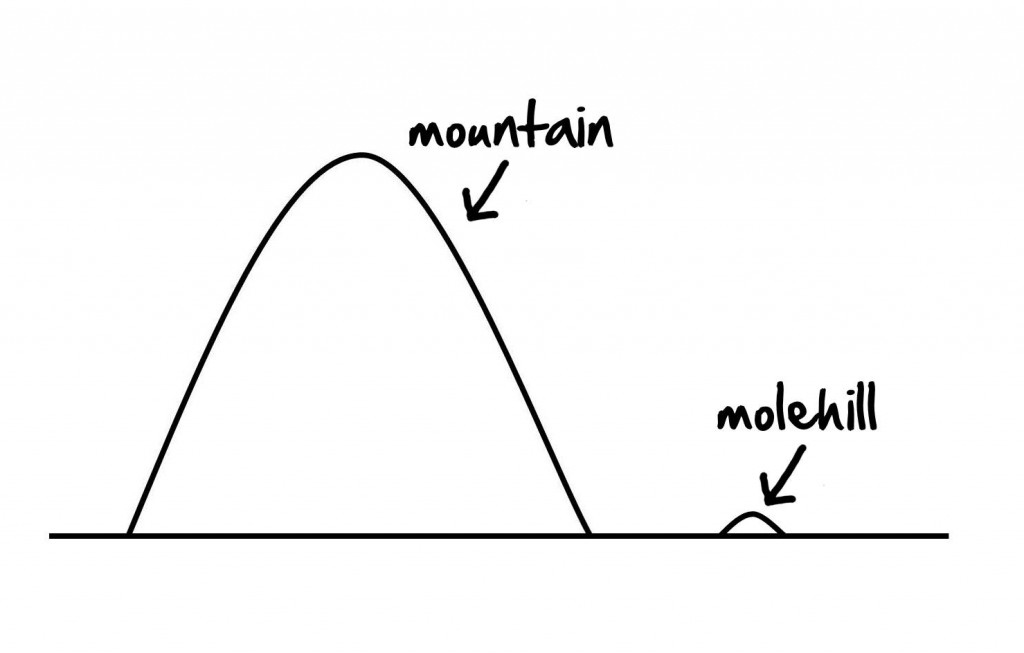
mountain-or-molehill-1024x765 (1)

When your boss says, “I’ve just got a few nits,” get ready for an all-nighter.

Nit, noun, a supposedly small mistake that is highlighted for correction.  Usage note: Merriam-Webster kindly points out that Brits use this word as an abbreviated form of “nitwit,” which, in turn, is a good name for anyone who’d use today’s FEotD with a straight face.  There are a couple of ways that a more senior banker can alert his financial serf that he has editorial changes to a deck (the boring banker will choose “deck” instead of “presentation” because the former provides a thrill up his leg, à la Chris Matthews, as he imagines himself possibly cutting the deck while fitting right in at a celebrity poker tournament with Ben Affleck, Tobey Maguire, and Shannon Elizabeth, instead of proofreading a deck that no one will ever read).  With a breezy inflection in his voice that belies the nature of the soul-sapping work he’s about to assign, he might phone his lackey and say, “Could you swing by my office?  I’ve got a couple of nits.”  The summons to his office is the banker’s preferred course of action because having usually worked his way up from the associate level cube-farm, he views his office as his hard earned sanctuary (complete with Lucite deal toys adorning the window sill), so he spends a strange amount of his time devising creative ways to make people come to him.

Continue reading

“Base Case”: Financial Expression of the Day


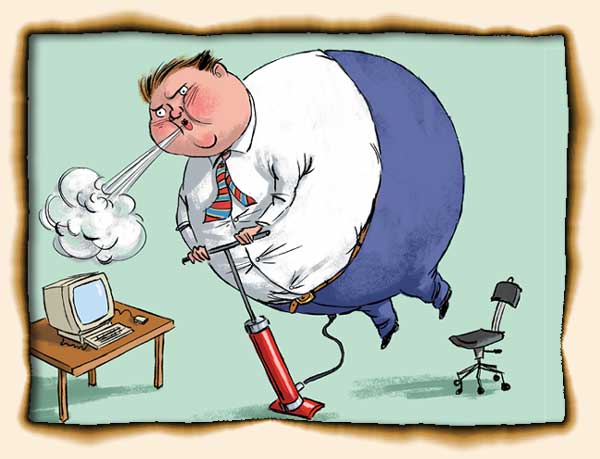
Beware the Financial Soothsayer...

Beware the Financial Soothsayer…

...they can't even match P. Phil

…he can’t even match P. Phil’s record


Base Casenoun phrase, the most likely or expected scenario when forecasting corporate financial performance.

Usage Note: Financial desk jockeys from buy-siders to investment bankers to corporate CFO’s use this term as part of their regular business of prognostication.  It’s especially relevant during the grind show where the bankers and companies shamelessly stump for money to run their business (or rather, to waste on pet projects, diversifying acquisitions with “synergies”, or to pay a dividend to their Private Equity owners).

In the realms of High Finance, the business of forecasting is part and parcel of the job.  Either you’re a CEO trying to convince investors your company will never see a downturn and can only grow year after year; or a banker trying to bamboozle the syndicate of “accounts” into thinking it’s normal that the company you’re hawking has an EBITDA forecast that looks like a “Hockey Stick”; or you’re a money manager trying to convince clients you can read the tea leaves and spot the canaries dying in the coal mine to ensure you make the best picks at the best times. Continue reading

“Agnostic”: Financial Expression of the Day

carlin

Agnostic? Who knows? Hedge fund pros don’t waste time on matters theological…

Boiler room

…they’re too busy worshiping the (god) almighty dollar.

Agnostic, adjective, having no bias with respect to position in the capital structure.  Usage note:  Merriam-Webster defines an agnostic (noun) as “a person who holds the view that any ultimate reality (as God) is unknown and probably unknowable; broadly : one who is not committed to believing in either the existence or the nonexistence of God or a god.”  However, when a hedgie (an execrable moniker for “hedge fund professional”) uses the term, there’s scant chance that he’s discussing matters theological because he typically worships one thing …the almightly dollar.  Moreover, despite how glamorous he allows his friends to think hedge fund life is (all the while keeping silent on the due diligence trips to places like Detroit to “kick the tires” on the sexiest of distressed auto parts suppliers), our hedge fund man simply doesn’t have time to finalize his thinking on the existence of God (or a god).  When he’s not updating one of his many 20-tab Excel financial models, he’s making frantic calls to headhunters while his portfolio manager boss, a graduate of the “what have you done for me lately” school of management, continues to humiliate him in front of the entire firm over his last two consecutive dogshit stock recommendations. Continue reading

“Face Time”: Financial Expression of the Day

When the MD hits the road, Face Time begins

When the MD hits the road, Face Time begins

Face Time, noun phrase, in investment banking, the act of putting in more hours at the office than necessary to accomplish a given day’s worth of work; typically manifested as arriving to work earlier than co-workers and superiors, and leaving work after all colleagues have undocked for the day.

Usage Note: Germane primarily to the analyst and associate, Face Time is an affectation for the purpose of leading superiors (and competing colleagues) to believe one is uber dedicated to maniacal levels of hard work and is possessed of an unquenchable lust for the honors and riches of a tenured investment banker. One of the most mysterious puzzles inside the royal domain of investment banking, Face Time has persisted as a practice among young bankers probably since the 1980’s.

It’s an oddity that defies reasonable explanation and the practice is all the more strange considering two things in particular: 1) Why would people of otherwise high levels of intelligence do this? Why would someone want to hang around the office until 10 or 11pm on one of the few evenings when they actually don’t have something work-related to do- a ridiculous assignment hasn’t been given, or one is not engulfed in the misery of managing the latest iterative change to “the document”? 2) Knowing that in most cases, the junior banker’s superiors (Vice Presidents, Directors, or Managing Directors) have come up the ranks acting out the same mindless show makes it all the more of a charade, and unlikely to convince anyone of your i-banking bona-fides. It’s an open secret and although manifestly asinine, no one can muster the courage to break the vicious cycle because if someone higher up had to do it, then “by God, the youngsters are going to pay their dues just like I did!” Like some form of Stockholm Syndrome, the young bankers strangely feel proud to be victimized office captives (at least in the early days) as a stripe that must be earned on their way to being masters of the universe. Continue reading

“Notwithstanding”: Financial Expression of the Day

blowhard

The corporate attorney will huff, puff, and then put you to sleep with sentences that are over a page long.  Why does he do it?

Notwithstanding,” preposition, in spite of.  Usage note:  There’s really only one type of person who uses this word in conversation:  An obnoxious prig who’s desperate to show everyone how smart he is, to wit:  “I must say, notwithstanding his B- in AP Latin, our son Ransford should probably squeak his way into Yale.”  It takes an unself-aware smart person to use this word correctly but not realize how painful it sounds.  Then again, someone who’d make the above statement just might enjoy coming across as unbearable.  One can get away with using the term more easily in print, but corporate attorneys- those who help investment bankers write registration statements, bond indentures, etc- have completely overdone it; they’ve fetishized the term.  When writing, they spit it out like a nervous tic, they use it as often as a gum-cracking Valley Girl says “like” or her twin brother says “brah.”  Here’s an example:  In First Data Corporation’s 143-page credit agreement, which is the legal document that sets forth the restrictions placed on the company by its bank lenders, “notwithstanding” appears 40 times; at one point, it shows up twice in the same sentence.

Why do the corporate shysters do it?  Why do they choose to subject readers of financial documents to such windbaggery?  When asked, Pierre Beauregard, Professor of Psychology and Director of the Lost Cause Institute at the University of the Confederacy, who has written extensively on the strange and unhealthy love-hate relationship between investment bankers and the corporate attorneys who bill them, had an interesting explanation: Continue reading

“Mushroom Treatment”: Financial Expression of the Day

mushrooms

The mushroom treatment: Keep them in the dark, feed them (bull)shit, and then can ’em if necessary.

Mushroom treatment,” noun phrase, a managerial style that involves handling employees the way most people think that mushrooms are grown:  keeping them in the dark (ie, uninformed), occasionally feeding them (bull)shit (ie, disinformed), and then canning (ie, firing) them if necessary.  Also “to mushroom,” verb, to administer the mushroom treatment.  Usage note:  Within the world of investment banking, those heartless enough to have what it takes to stick around quickly learn to give the mushroom treatment to those below them in the hierarchy (the truly brash also give the treatment to peers).  When a vice president learns that a client meeting has been postponed from next Monday to next Wednesday, will he give the associate below him a break and kindly inform him that he won’t need to work over the weekend?  Of course not; he’ll opt for one of the oldest tricks in the banker book, the false deadline. Continue reading

“EBITDA”: Financial Expression of the Day

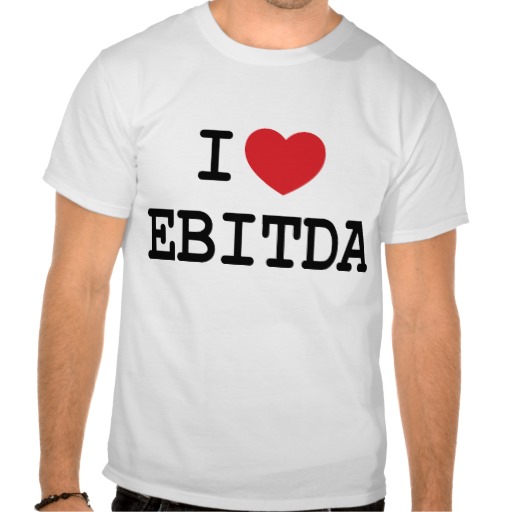
i_heart_love_ebitda

EBITDA: Acronym, Earnings Before Interest, Taxes, Depreciation, and Amortization.

Pronunciation Guide: The first rule in using this financial shibboleth is knowing how to say it correctly; it is pronounced strictly as two words with three syllables: /ē-bit dah/.  Pronouncing as one word followed by two letters is also acceptable: /ē-bit D-A/. It is not advisable to pronounce the term in any other way.  Some southerners, and some corporate CFO’s who came up the ranks with an accounting background (rather than the more astute Wall Street pedigree) have been heard to say /ēbiduh/ or /ehbiduh/. This betrays an amateurish knowledge of high finance and will engender snickers and silent chuckles from the white shoe financier. For example, George “Dubya” Bush might say to Dick Cheney: “Boy Dicky, I misunderestimated how much ēbiduh Haliburton would produce with all yer kickbacks!” Continue reading

“Net Net”:  Financial Expression of the Day

Breaking bad

Like Heisenberg, the i-banker wants to know the net net: Are we gonna do a deal?

“Net net,” noun phrase, the ultimate result or outcome; also adverbial phrase, in summary.  Usage note:  Because this term can be employed as either a noun or an adverb, one hears it fairly often in the financial field, which is unfortunate because its utterance is about as annoying as stepping in dog turd.  It’s obnoxious because the user of the term often seems to be implying that he has no interest in hearing the current speaker’s full message because the former is too busy, intelligent, and important for such silliness.  Someone asking for the “net net” frequently means:  “Spare me all your windbaggery and just give me the bottom line.” Continue reading

“Burn Rate”:  Financial Expression of the Day

fire1153758-525x300

There’s only one burn rate that the i-banker cares about: his own.

Burn rate,noun phrase, the speed at which a company consumes cash.  Usage note:  Investment bankers, particularly those who advise money-losing internet companies, love this expression.  After having wrapped up a meeting with the “deal team” and instructed his minions to redo the entire 90-page pitchbook (with the client meeting slated for 9 AM the next morning), the i-banker might kick back in his corner office and enjoy a brief breeze-shooting session with the senior vice president on the project, who’s a great audience for the MD because the former will laugh at all the MD’s stupid jokes.  There the senior i-banker will sit, tasseled loafers up on the desk, quite possibly spinning his Mont Blanc pen around his thumb (many a banker prides himself on pen-spinning ability because he ludicrously thinks it adds some sort of jock street cred to his awkward and totally unathletic body language), while saying something like, “With a burn rate like that, they might not make it through the end of the year.  Have the analyst run the model again.”  There’s a good chance that the MD couldn’t run the model if his bonus depended on it, so he’ll keep his instructions very “big picture.Continue reading