“Step Up”: Financial Expression of the Day

pooper-scooper

The i-banking VP will demand that underlings “step up” on even irrelevant, crappy assignments.

Step up,” verb phrase, to make an unusually significant effort.  Usage note:  A vice president will never reveal to an underling when a task assigned to him is low priority.  In addition, the VP will almost always employ a false deadline.  For example, if the VP has about eight hours of work that needs to be done before presenting information to a managing director on a Wednesday, a particularly obnoxious VP will stick his analyst or associate with the task on Friday afternoon and tell him that he wants a hard copy of the completed job delivered to his house by noon on Sunday, three full days before the meeting.


Continue reading

“Bankster”: Financial Expression of the Day

The Banksters Banquet

The Banksters Banquet

Bankster,” noun portmanteau of banker and gangster, pronounced /`bangk-stah/ if the user is striving for ‘street cred’ (i.e. street credibility for wannabe gangsters).  A profiteering, predatory or dishonest financier.

Usage note: This term is used primarily as a pejorative. Occupy Wall Street-type dingleberries over-apply the word to describe all those that actually occupy Wall Street jobs. Of course, in many instances the term is rightfully applied to the Fat Cats of Finance (as opposed to the armies of drones working in the industry), who are regularly fleecing the rest of society in the name of helping people save, manage and raise money. Continue reading

“Take a Hit”: Financial Expression of the Day

Ouch, that was my bonus.

Ouch, that was my bonus.

“Take a Hit”, verb phrase: In business and finance, to suffer an adverse result or outcome. In this context, it is something to be avoided. In cannabis culture, to inhale (i.e. to take a drag, puff, or toke) of a marijuana cigarette (a.k.a. joint, spliff, blunt, or roach). In this context, it is something sought after. The dual meaning and diametric connotation can potentially confuse and ensnare the neophyte junior analyst at a hedge fund or investment bank, if he is not used to keeping his personal and professional lives separate.

Usage Note: Finance and business types use this phrase usually when money is lost in one way or another, often with an element of surprise. For example, a CEO (such as Ron Johnson of recent JC Penney fame) trying to explain a 20% decline in sales year-over-year might say, “We underestimated the number of customers we would lose by changing our pricing strategy from discount to premium luxury over a single weekend. Our revenues took a hit as a result.” Continue reading

“Due Dilly”: Financial Expression of the Day

under a rock

A banker doing due dilly will leave no stone unturned.

“Due dilly,” noun phrase, a diminutive form of “due diligence”:  research and analysis of a company or organization done in preparation for a business transaction; a financial reconnaissance of sorts.  Usage note:  According to Hilarius Fuchs, Professor of Psychiatry at Colorado School of Professional Parapsychology, people who enjoy both working late and playing with spreadsheets and PowerPoint, e.g., investment bankers, are weird and have weird senses of humor, facts which explain why i-bankers use this phrase so often that it’s almost ceased to have meaning. Continue reading

“Leave Word Call”: Financial Expression of the Day

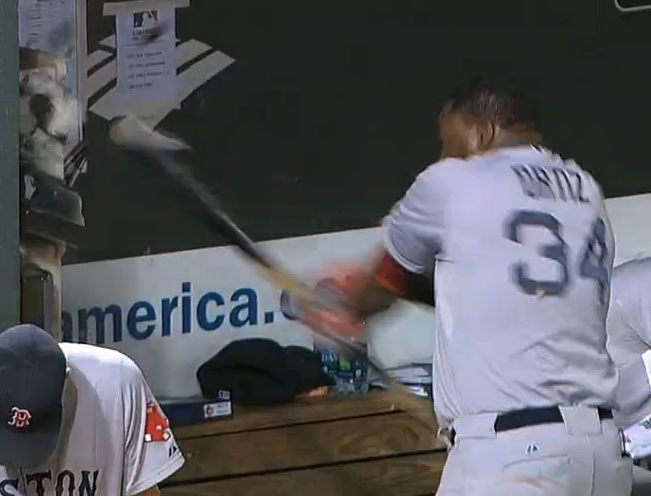
DavidOrtizSmashesPhone

David Ortiz moments after receiving a leave word call.

“Leave word call,” noun phrase, a form of internal phone message in which the caller doesn’t leave a voicemail; instead he simply leaves a record of his name, extension, date, time called, and number of call attempts.  Usage note:  When employed by a manipulative person, this form of communication is truly vile because it cannot be checked from outside the office, so it can serve as a way for a taskmaster VP (or higher) to keep underlings chained to their desks.  Fortunately, not all firms’ phone systems offer the leave word call (“LWC”) function, an omission that probably cuts costs because LWC recipients have been known to throw their phones and break office equipment in frustration.  A leave-word message is only left for a subordinate, never the other way around.  In theory, leaving such a message for a superior can be done but would be career suicide. Continue reading

“Slam Dunk”: Financial Expression of the Day

Slam dunk

An investment banker’s ideas are always slam dunks.

Slam dunk,noun phrase, something that is certain to succeed; a sure bet.  Usage note:  This is a jock-wannabe term that bankers love to use.  A managing director always tries to project unshakable confidence, even when presenting his most harebrained sales pitches.  At the same time, he never allows the client to see that he’s scheming for fees like a gambler in hock to the mob.  Continue reading

“Razor Blade Element”: Financial Expression of the Day

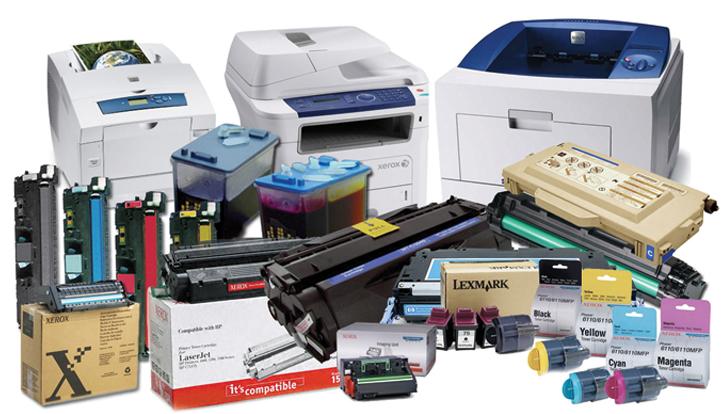
printers_full

Bankers and salespeople love a story with a razor blade element.

Razor blade element,” noun phrase, a term that describes the enviable position of a company that sells a product for which the customer will have to frequently purchase replacement parts.  Usage note:  An investment banker will often have to rely on his firm’s equity or debt sales force to sell a transaction (e.g., an IPO).  Despite how well educated many salespeople are, the i-banker thinks just about all of them are idiots incapable of doing his type of complicated work, that is, making pitchbooks with lots of colorful pie charts and tables, etc.  Continue reading

“Synergistic value”: Financial Expression of the Day

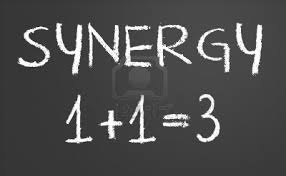
synergy

The math gets fuzzy when bankers talk about synergies.

“Synergistic value,” noun phrase, the non-existent benefits that an investment banker attempts to convince a client will arise from any fee-generating behavior.  Usage note:  Although he might jazz up his appearance with a Kiton suit, Brioni tie, and Edward Green monk strap shoes, the M&A i-banker is really just a salesman.  In his pitches, he’ll talk about strange-sounding things like enterprise value (“EV”), earnings per share dilution, net operating losses (“NOLs”), and debt leverage instead of miles per gallon, accident history, rust-proofing, and lease payments, but he’s not that different from a used car salesman.  They both want you to buy something, and then they want to help you finance it. Continue reading

“Dry Powder”: Financial Expression of the Day

Wolf-of-Wall-Street

Wall Street guys love dry powder.

Dry powder,” noun phrase, a reserve of cash.  Usage note:  Within the financial field, this popular yet dreadful expression can be used a couple of ways.  For example, an investment banker, looking for some excuse to propose a value-destroying yet fee-generating corporate finance action, might say of a client:  “They’ve got over $50 million of dry powder on the balance sheet, let’s pitch them on buying that typewriter company in Detroit.”  Continue reading

“To Be Long”:  Financial Expression of the Day

Fidel long watches

Like El Jefe, many investment bankers go long watches of the flashy variety.

To be long,” verb phrase, used to describe the position of an investor who owns an asset, like a stock or a bond, with the expectation that the asset will increase in value; the opposite of “to be short.”  Because this is a trading floor term and many investment bankers and analysts desperately want to be traders (the latter have better hours and no real requirement to act in a professional manner; if anything crude behavior is encouraged), the i-bankers and number-crunchers twist themselves into knots using this expression in all kinds of half-witted ways (to be fair, those on the trading floors do the same).  Continue reading